

Jantar Mantar Delhi is an astronomical observatory on Parliament Street in Connaught Place, New Delhi. Built in 1724, it is one of the city’s distinctive new delhi monuments: a complex of large instruments designed to track the movements and timings of the Sun, Moon and planets.
- Location: Parliament Street, Connaught Place
- Built: 1724
- Instruments: 13 astronomical instruments
- From Prime Delhi: About 12 minutes by car
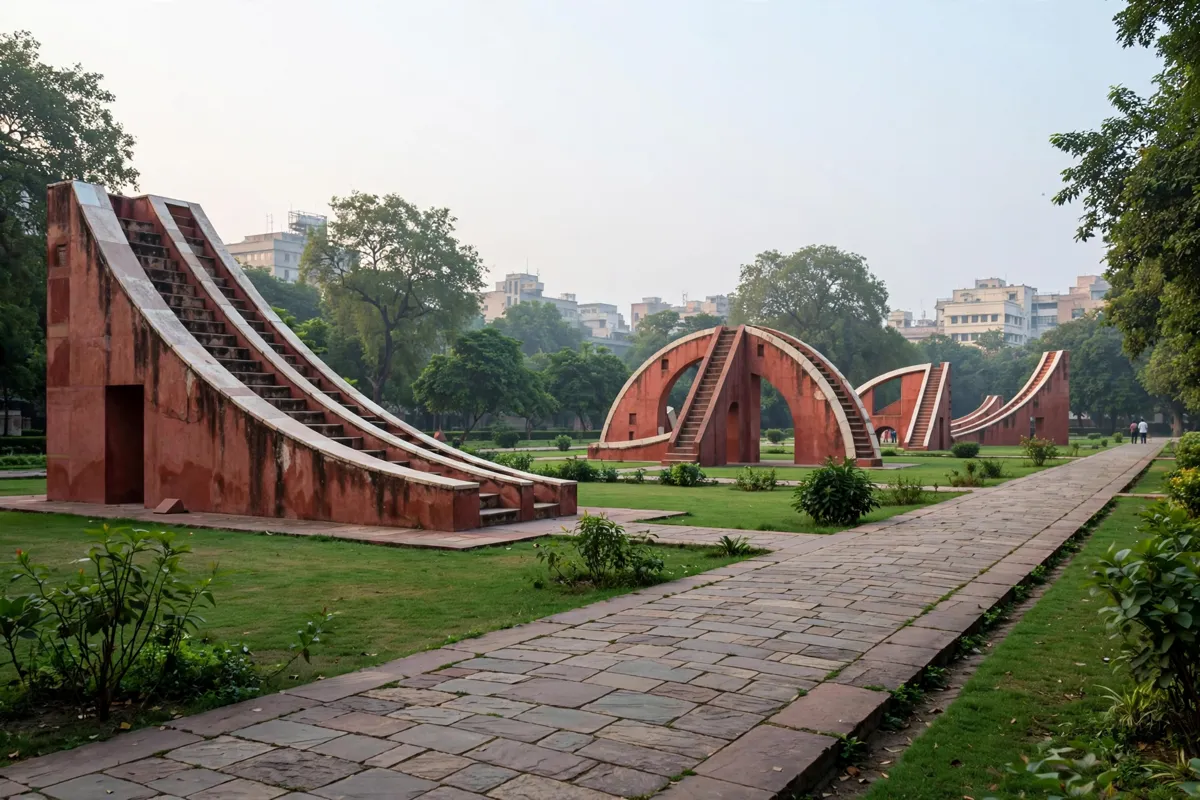
What makes the observatory distinctive
Jantar Mantar stands out for its scale: its instruments are substantial architectural structures, not small handheld devices. Maharaja Jai Singh of Jaipur built the Delhi observatory in 1724 because he considered existing astronomical instruments too small for accurate measurements.
The complex comprises 13 instruments designed to observe celestial movements and timings. Their forms and purpose make the observatory a notable stop among historical places in New Delhi, though its original function has limits today. Delhi Tourism explains that tall buildings around the site prevent the instruments from making accurate observations.
A small Bhairava temple stands toward the eastern side of the observatory. Together, the instruments and temple give the grounds more to notice than a single large sundial.
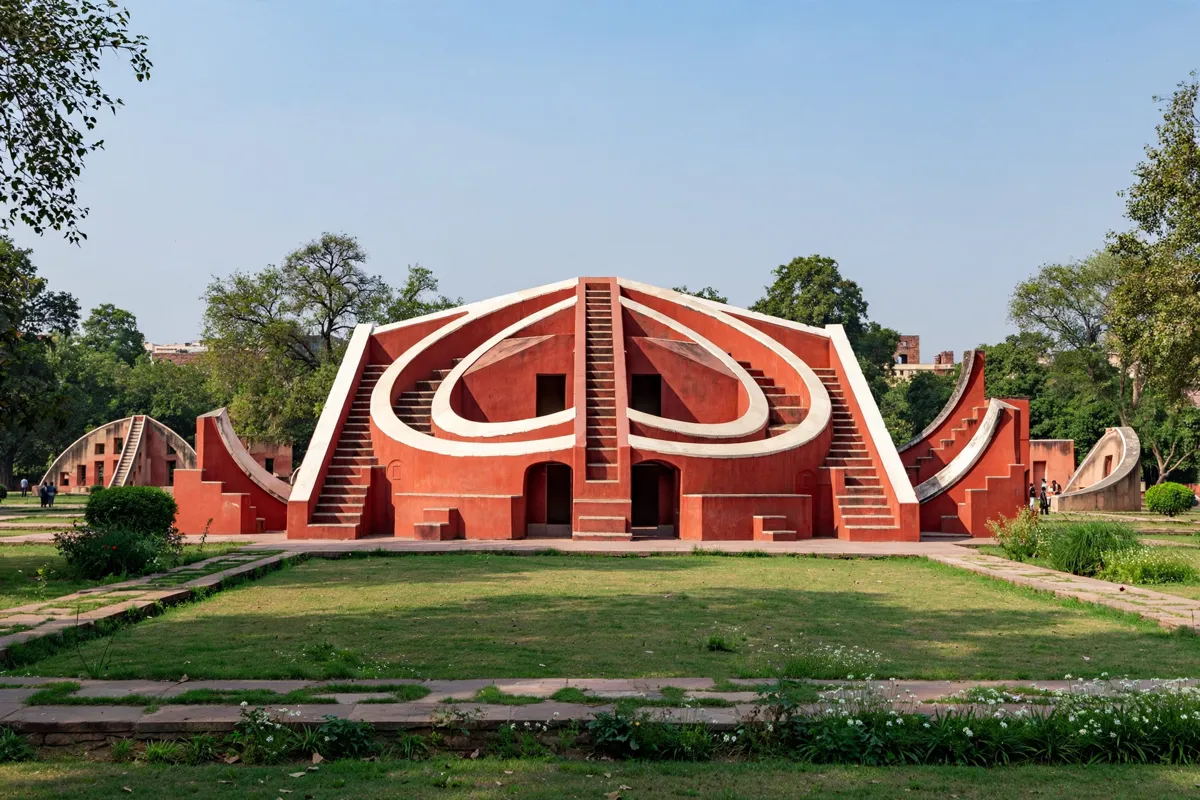
Key instruments and what they show
The Samrat Yantra, Jayaprakash Yantra and Misra Yantra are among the observatory’s major instruments, each built for a different kind of observation.
Samrat Yantra
This large sundial is used to check the time. Its size reflects Jai Singh’s preference for large-scale instruments.
Jayaprakash Yantra
The Jayaprakash Yantra is hemispherical. Its markings help align star positions.
Misra Yantra
The Misra Yantra is used to determine the shortest and longest days of the year. It adds a seasonal dimension to the site’s astronomical purpose.
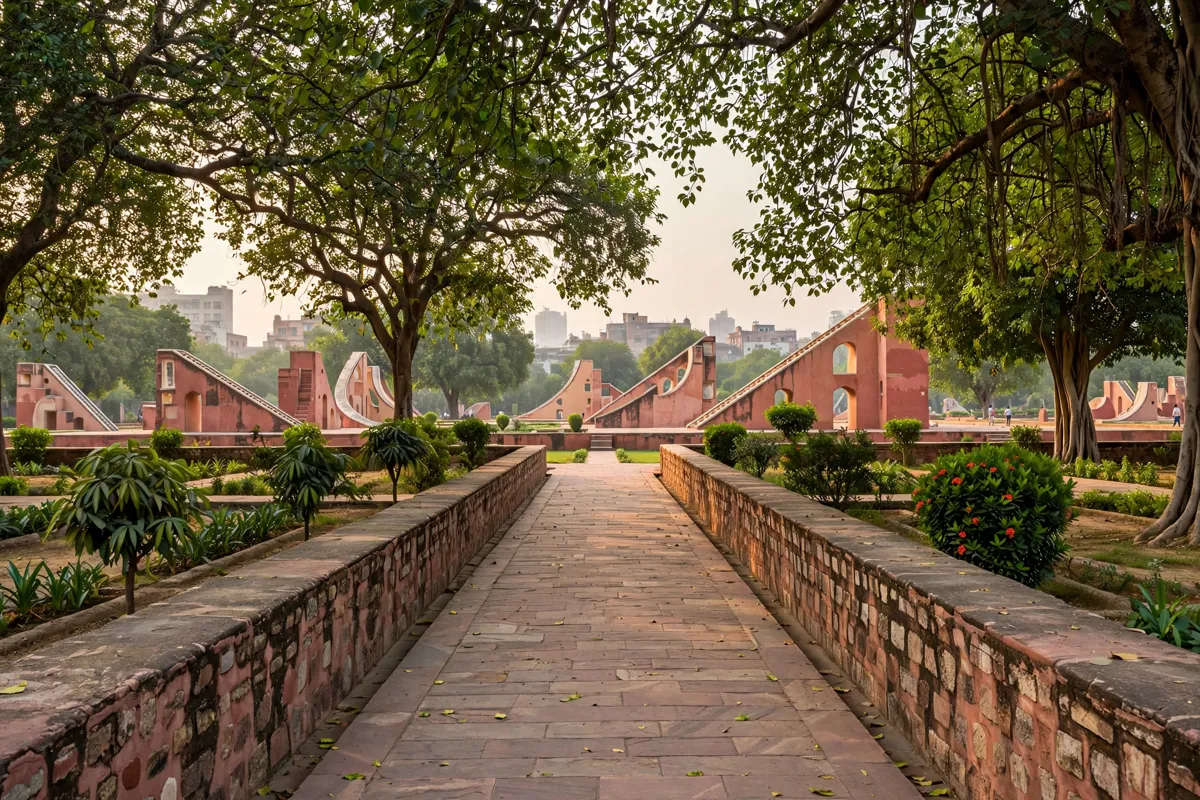
Entry, hours and visitor guidance
Delhi Tourism gives the daily opening pattern as sunrise to sunset, with entry fees of ₹25 for Indian visitors and ₹300 for foreign visitors. Photography is free, while video filming costs ₹25. These hours and charges can change, so check the official site before you go.
Online ticket booking is available through the Archaeological Survey of India’s monument ticketing service. For a visit, take time to look at the instruments from different angles and read their markings; the structures are the main attraction, rather than a working observatory for accurate modern observations.
Madame Tussauds Museum is another named attraction in New Delhi; its ticket and visit-planning details can help with a different kind of stop.
How do you get to Jantar Mantar from the hotel area?
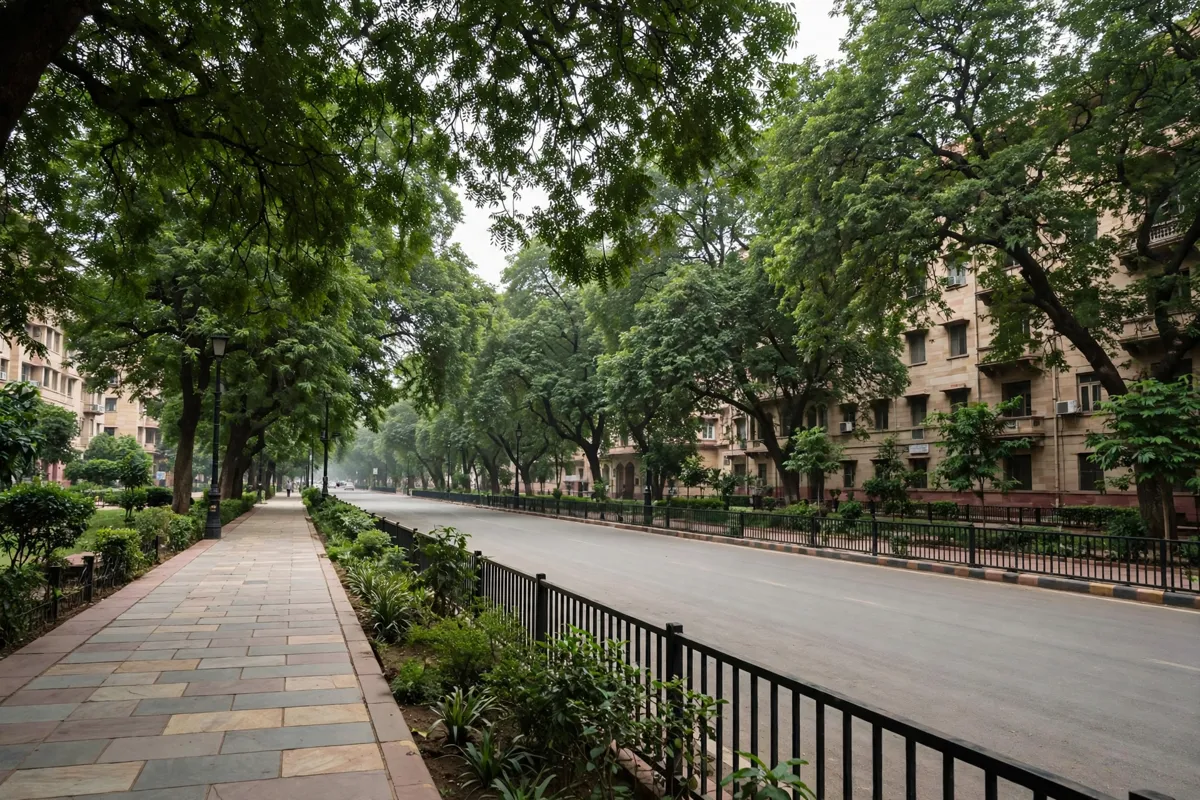
Jantar Mantar is about a 12-minute drive from Prime Delhi. The walk takes about 31 minutes from the hotel, so you can choose between walking and a car journey.
Delhi Tourism identifies Patel Chowk as the metro station for the observatory. Ramakrishna Ashram Marg station is on the Blue Line; from there, the walk to Jantar Mantar is estimated at 2.8 km and 33 minutes. You can also take a taxi from that station; the listed estimate is about 3 minutes for ₹100–₹130.
To place the observatory within a broader day in the city centre, use this one-day New Delhi itinerary as a planning companion.
FAQs
Where is Jantar Mantar in Delhi?
It is on Parliament Street in Connaught Place, New Delhi.
Who built Jantar Mantar in Delhi?
Maharaja Jai Singh of Jaipur constructed the Delhi observatory in 1724.
What can you see at Jantar Mantar?
The site has 13 astronomical instruments, including the Samrat Yantra, Jayaprakash Yantra and Misra Yantra, as well as a small Bhairava temple toward the east.
Can the instruments still make accurate observations?
No. Tall buildings around the observatory prevent its instruments from making accurate observations.