

For a visit focused on New Delhi history, Ghiyasuddin Tughlaq’s tomb is a red-sandstone mausoleum beside Tughlaqabad Fort, in the Tughlaqabad area of the city.
The tomb and the fort’s ruins are remains of the historic city of Tughlaqabad, making them a way to look beyond the central landmarks. The Prime Delhi A Luxe Collection Hotel New Delhi City Centre is a central base for exploring the city.
- Setting: beside Tughlaqabad Fort, in the Tughlaqabad area of New Delhi
- Architecture: red sandstone, a white-marble dome and a pentagonal enclosure with high walls
- History: the tomb was constructed in 1325; the fort was built in 1321 and abandoned in 1327
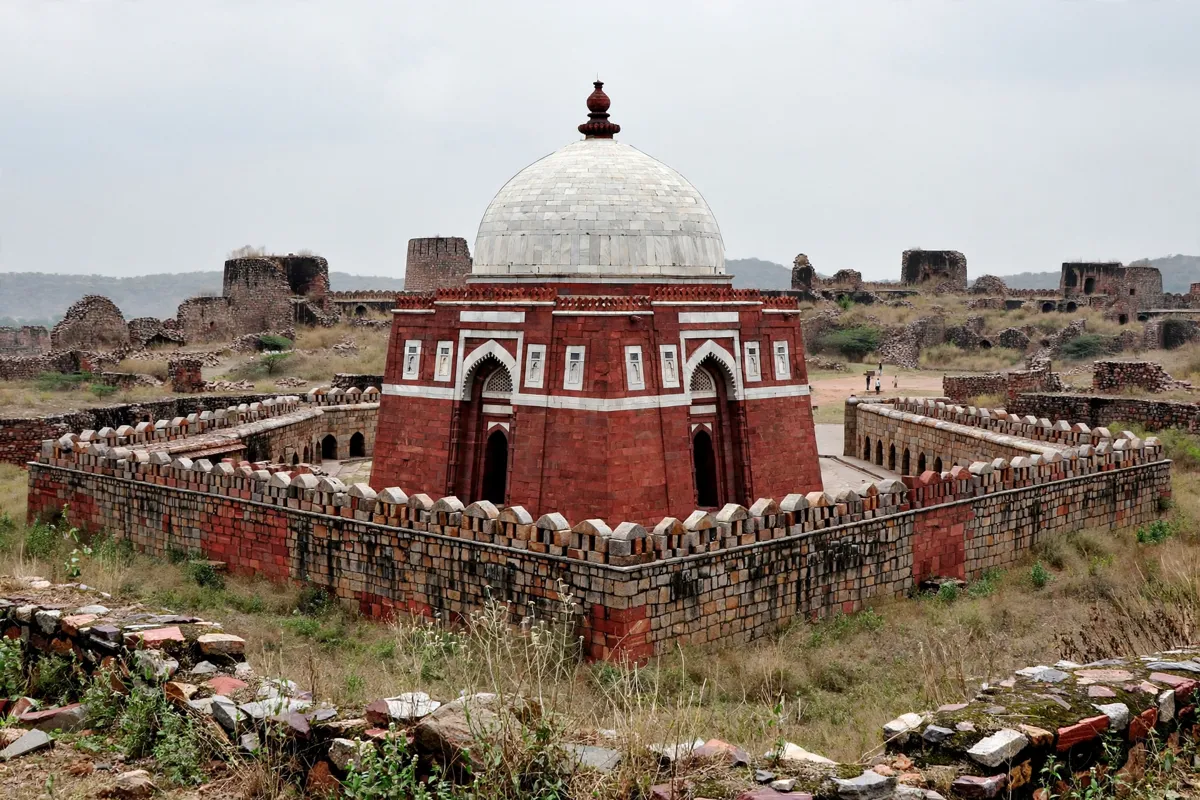
A landmark for New Delhi history
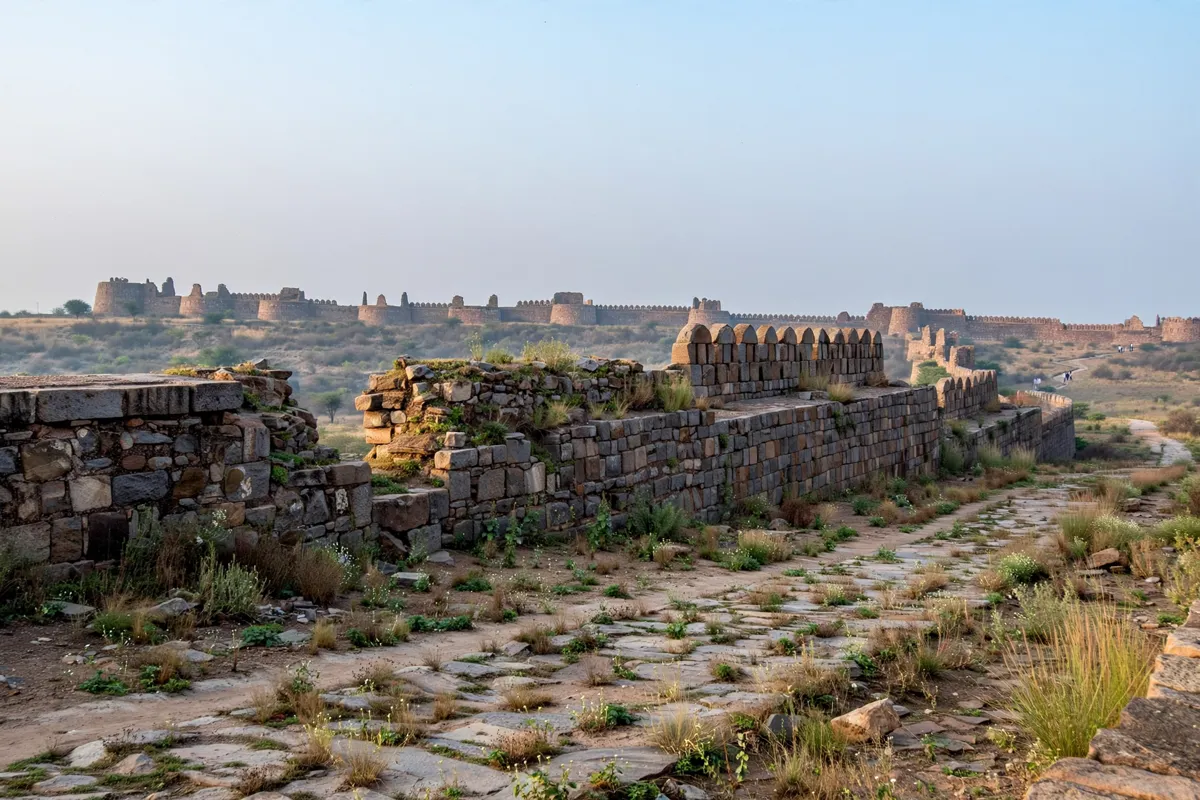
Ghiyasuddin Tughlaq’s tomb stands beside Tughlaqabad Fort, where the remains of the fort and the adjacent mausoleum recall the historic city of Tughlaqabad. The South East Delhi district administration dates the tomb’s construction to 1325. Ghiyas-ud-din Tughlaq built the fort in 1321, and it was later abandoned in 1327.
The tomb’s red sandstone and white-marble dome give it a distinct profile. It sits inside a pentagonal enclosure with high walls, making the layout part of the monument’s character as well as its exterior.
What can you see at the tomb?
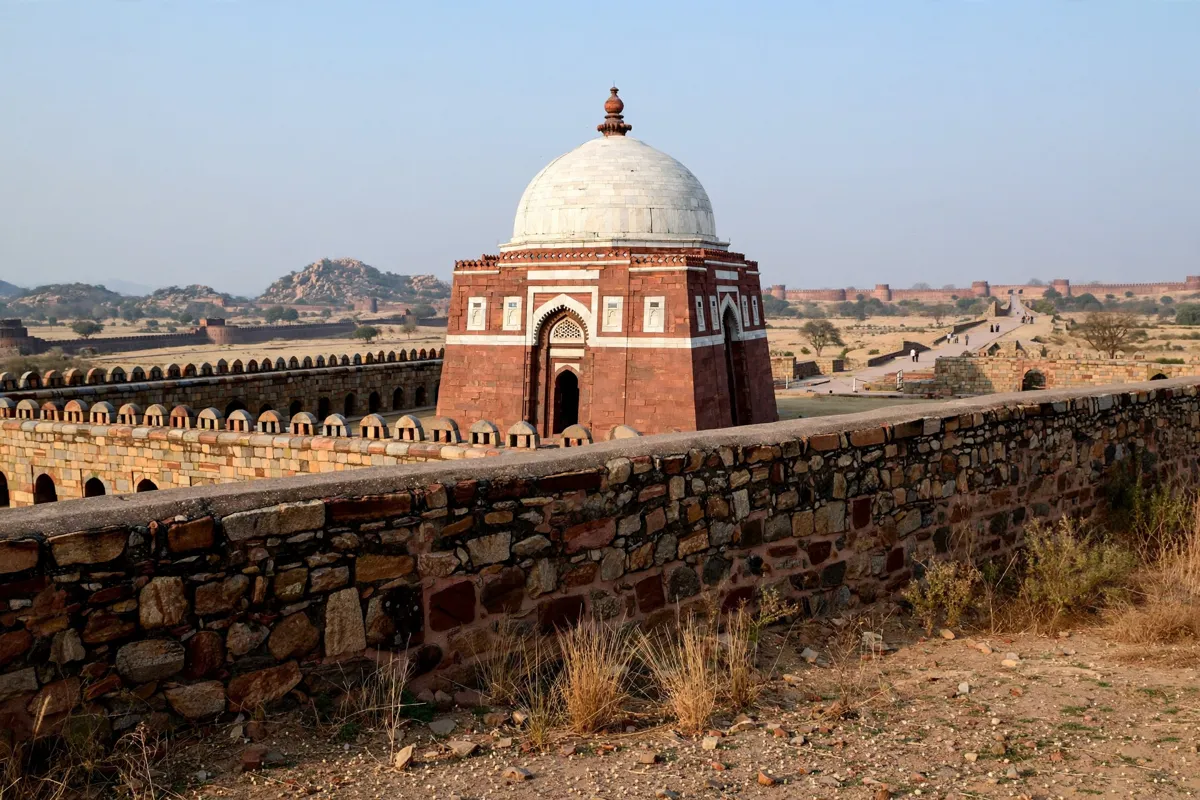
Look for the contrast between the red sandstone and white marble, then take in the domed roof and the high-walled pentagonal enclosure. These architectural features are the defining details of the mausoleum.
The tomb and fort are beside one another, but Adilabad Fort is a separate nearby historic site: it lies about 1 kilometre east of Tughlaqabad Fort. For a separate green-space stop in central New Delhi, consider what to know about visiting Talkatora Gardens.
Planning a visit
Opening hours, entry charges and visitor rules for the tomb can vary, so check the official site before you go. The South East Delhi district administration describes the tomb’s history, while a general Delhi government directory response about ASI monuments does not confirm this tomb’s individual entry fee or hours.
Do not assume the opening hours published for Tughlaqabad Fort also apply to the tomb: the fort’s listing does not establish the mausoleum’s hours. For transit planning, Ramakrishna Ashram Marg station is about a five-minute walk from the hotel; the New Delhi Metro can help with general transit planning.
FAQs
Where is Ghiyasuddin Tughlaq’s tomb?
It is in the Tughlaqabad area of New Delhi, beside Tughlaqabad Fort.
When was the tomb built?
The South East Delhi district administration describes the tomb as constructed in 1325.
What is distinctive about the tomb’s architecture?
The mausoleum is made of red sandstone and has a white-marble dome. It stands within a pentagonal enclosure with high walls.
Are the tomb’s opening hours and entry fee confirmed?
The tomb’s specific hours and entry charge are not established. Check the official site before visiting.